Growing a consumer packaged goods (CPG) brand in retail has a cash problem built into it. The retailer wants the goods months before the retailer pays for them, your manufacturer wants a deposit before it starts, and every new door you win makes the gap between the two bigger. Brands do not usually fail because nobody wanted the product. They stall because the order was bigger than the bank account, and the founder either turned it down, shipped short, or gave up equity to fill it.
This guide covers the whole path: who lends to CPG brands, the metrics that decide how much you can borrow, every financing structure available to you, what each one costs, the documents you will be asked for, and the sequence a deal follows from buyer commitment to funded and repaid. It is written for founders, finance leads, and operators (the people who have to make the order happen), not for lenders.
How CPG lending works
The order-to-cash gap
Every retail order runs on the same clock. You commit to production and pay for materials at day zero. Goods arrive from the manufacturer or co-packer around day 30. You deliver to the retailer around day 60, the invoice is approved around day 70, and the retailer pays 30 to 90 days after delivery, once its terms, its deductions, and its payment run have all done their work. Suppliers often want deposits and payment at shipment, and freight and duty come due in transit. Add it up and a brand routinely has cash out the door for 90 to 130 days before the first dollar comes back.
That stretch is the order-to-cash gap, and it is the whole reason this category of lending exists. A $1,000,000 purchase order at a 78% all-in cost ratio needs $780,000 of cash before anything ships. A brand with $300,000 on hand is $480,000 short, and the shortfall has to come from somewhere. Run your own order through the working capital gap calculator.
Who lends to CPG brands
There is no single lending market for CPG brands, and the options overlap less than founders expect. Knowing which one your need belongs in is the first decision, because taking a production request to a bank line, or a factoring problem to an MCA, costs weeks and often money you cannot get back.
Commercial banks lend against history and collateral. A bank line of credit or asset-based loan is the lowest-cost capital a brand can get, and also the hardest, because the borrowing base is sized on last year's receivables and inventory rather than the order you just won. Most banks want two or more years of profitable operations before a brand qualifies at all.
Factors buy or lend against your invoices after you ship. They are fast and they understand retailer paper, but by definition they start after production is already paid for.
Purchase order lenders pay your supplier against a signed PO. They cover the production gap, usually for finished goods you resell rather than goods you manufacture, and they generally will not move until the formal PO exists.
Retailer supply chain finance programs let approved suppliers get paid early on approved invoices, at a discount. Useful at the end of the cycle, invisible at the beginning.
Merchant cash advance and revenue-based lenders advance a lump sum against future revenue and pull repayment daily or weekly whether or not the order has shipped. They are the fastest yes in the market and, annualized, the most expensive.
Direct production lenders underwrite the retailer and the order rather than your historicals, fund the cost of goods before shipment, and are repaid from the retailer's payment. This is the category Bridge built its CPG business around.
Why an order is a debt problem, not an equity problem
The most expensive way to fund a production run is with ownership. Equity is permanent; a production run is temporary and self-repaying. A brand that sells 10% of itself to fill a $1,000,000 order has paid for that order with 10% of every dollar the company is ever worth, and the bill arrives at the exit. Debt that is sized to the order, funded when the buyer commits, and repaid when the retailer pays costs a fee once and then goes away. Every financing type in this guide is a form of that trade. The differences are when the money arrives, what it is secured by, and what it costs.
Bridge lends directly on production for CPG brands, with $500 million of dedicated capacity, and for other needs Bridge may structure and secure financing through its lender network. The applicable role is stated clearly for every transaction. In 2025 the platform closed more than $500 million across hospitality and CPG.
The numbers lenders check

Before anyone discusses a fee, a lender is testing whether the order can carry the financing you are asking for and whether the brand can survive the cycle. These are the measures that decide it, roughly in the order they get run.
Gross margin and retailer margin
Gross margin is revenue minus cost of goods sold, divided by revenue. It is the first number a lender reads because everything downstream (deductions, freight, financing) has to fit inside it. As of Q3 2026, CPG brands typically run 25% to 45% gross margin in mass and grocery wholesale, 40% to 60% in specialty and natural, and 55% to 75% direct-to-consumer. The retailer takes its own margin on top of your wholesale price: roughly 28% to 38% in mass retail, 30% to 40% in grocery, 38% to 50% in natural and specialty, and 12% to 16% at club on much higher volume. A brand that prices for DTC and then walks into a grocery buyer meeting often discovers there is no room left for anyone. Check yours with the gross margin calculator and the wholesale margin calculator.
Landed cost
Landed cost is what a unit actually costs once it reaches your warehouse: cost of goods plus international and domestic freight, customs duty and tariffs, brokerage, insurance, and drayage. It excludes downstream costs like warehousing and fulfillment. Importers commonly see landed cost run 10% to 30% over the ex-works unit cost. A product bought at $8.00 that lands at $9.60 is 20% over base, and a lender pricing the order will use $9.60, not $8.00. Duty and tariffs alone can be 3% to 25% of landed cost depending on origin, which is why a tariff change mid-order shows up in the underwriting. Build yours in the landed cost calculator.
Cash conversion cycle
The cash conversion cycle is the number of days between paying your suppliers and collecting from your customers: days inventory outstanding plus days sales outstanding minus days payable outstanding. A brand holding inventory 75 days, collecting in 45, and paying suppliers in 30 runs a 90-day cycle. Retail CPG brands commonly run 60 to 120 days as of Q3 2026, while DTC brands can run 20 to 50 because the customer pays at checkout. The longer your cycle, the more working capital every dollar of growth requires, and the more a lender has to believe in the retailer at the far end of it. Run yours in the cash conversion cycle calculator.
Inventory turnover
Inventory turnover is cost of goods sold divided by average inventory. A brand with $2,400,000 of annual COGS carrying $400,000 of average inventory turns 6.0 times a year, or about 61 days of inventory on hand. Many CPG SKUs target 4 to 8 turns (45 to 90 days) as of Q3 2026; packaged food and beverage runs faster at 6 to 10 turns, durable goods slower at 3 to 6. Slow turns are a lender's early warning: they mean cash is sitting in stock that has not sold, and an inventory lender will discount that stock accordingly. See the inventory turnover calculator.
The working capital gap per order
The working capital gap is the cash you need to fulfill an order minus the cash you have. It is computed one order at a time, because that is how production lenders size a facility. All-in cost ratios (production plus freight and duty as a share of order value) commonly run 60% to 85% for CPG brands, which is why a $1,000,000 order can need $780,000 up front. The gap, not the order size, is the loan request. Lenders like to see that the brand is contributing something to the order, and they like it more when the gap is explained by growth rather than by losses elsewhere.
PO profitability after deductions
PO profitability is what is left of the order after cost of goods, freight, duties and tariffs, retailer fees and deductions, and financing cost. It is the number a production lender cares about most, because it is the cushion between the retailer's payment and the lender's repayment. As of Q3 2026 the typical cost lines on a retail PO run 55% to 70% for COGS, 3% to 8% for freight, 0% to 10% for duties depending on origin, 4% to 10% for retailer fees and deductions, and 2% to 4% per cycle for financing. A well-run $1,000,000 order nets 15% to 25% after an all-in cost ratio of 75% to 85%. The line founders miss is deductions: shortages, damages, compliance fines, and promotional allowances routinely take 4% to 10% off the invoice before the retailer pays it. Run the full stack in the PO profitability calculator.
Retailer credit quality and order confirmation
This is the metric that has no calculator, and it is the one a production lender weighs most. Who is the payer, how reliably do they pay, and how firm is the order? A national retailer with decades of on-time remittance is a different credit from a regional chain or a distributor, and the financing reflects it. Order confirmation runs on a spectrum: a signed PO is the firmest, but a buyer's order plan, a modular commitment, or a buyer's email are real evidence too, and some lenders (Bridge among them) will underwrite on them. What no lender will do is fund an order that exists only in the founder's forecast.
Break-even units
Break-even units is fixed cost divided by contribution margin per unit, where contribution margin is price minus variable cost. A brand with $100,000 of fixed cost and $10 of contribution per unit has to sell 10,000 units before it earns anything. It matters to a lender because it says how far below plan the order can land and still leave the brand standing. Slotting fees, first-order promotional allowances, and a new co-packer's minimum run all push the number up. Run yours in the break-even units calculator.
| Metric | What it tells a lender | Indicative range, Q3 2026 |
|---|---|---|
| Gross margin | Room for deductions, freight, and financing | 25% to 45% mass and grocery; 40% to 60% specialty |
| Retailer margin | What the buyer takes on top of wholesale | 28% to 38% mass; 30% to 40% grocery; 12% to 16% club |
| Landed cost premium | The real unit cost after freight and duty | 10% to 30% over ex-works |
| Cash conversion cycle | Days of cash tied up per order | 60 to 120 days retail CPG; 20 to 50 DTC |
| Inventory turnover | Whether stock is selling or sitting | 4 to 8 turns; 45 to 90 days on hand |
| All-in cost ratio | Cash needed per dollar of order | 60% to 85% of order value |
| Retailer deductions | What comes off the invoice before payment | 4% to 10% of invoice |
| Net PO margin | Cushion between retailer payment and repayment | 15% to 25% on a well-run order |
Indicative ranges from the Bridge financing tools, reviewed as of Q3 2026. Category, channel, and origin move every one of them.
The financing types

Eight structures cover almost every CPG financing need. They are not ranked. The right one depends on where you are in the order cycle, what you can pledge, and how fast you need an answer.
Production financing
Production financing funds the cost of making goods for a confirmed buyer before they ship: materials, manufacturing or co-packing, packaging, and often freight. The lender underwrites the buyer and the order economics, pays suppliers directly or funds draws as production progresses, and is repaid from the retailer's remittance, with the remainder released to the brand. It starts at buyer commitment, which is the earliest any capital in this guide arrives. Bridge's version funds up to 100% of cost of goods, sizes facilities from $250,000 to $50 million, does not require the signed PO to start, and does not pull daily payments. Read more on purchase order and production financing.
Traditional purchase order financing
Traditional PO financing pays your supplier against a signed purchase order from a creditworthy customer, typically by letter of credit or direct payment, and is repaid when the customer pays. It was built for resellers and importers buying finished goods, so many PO lenders will not fund raw materials or a manufacturing process you control, and almost all of them wait for the formal PO. Fees run per cycle rather than per year, which is why the annualized cost surprises first-time borrowers (see the cost chapter).
Inventory financing
Inventory financing is a loan or revolving line secured by finished goods you already own. The lender advances a percentage of the inventory's appraised or cost value, monitors it through reports and periodic field exams, and is repaid as the inventory sells. It suits brands carrying stock across channels, including DTC, and it does not depend on a specific order. The trade is that the advance rate is conservative, slow-moving SKUs get excluded, and it does not fund the production of inventory you do not yet have.
Invoice factoring
Factoring is the sale, or the pledge, of your receivables after you ship. The factor advances most of the invoice value up front, collects from the retailer, and remits the balance less its fee. Recourse factoring leaves you on the hook if the retailer does not pay; non-recourse shifts that risk to the factor for a higher fee. Most retail factors notify the retailer and take assignment of payment. Factoring is fast, scales with sales, and understands retailer deductions. It also starts at the invoice, which means you still funded production yourself.
Retailer supply chain finance and early pay
Many large retailers run supply chain finance (SCF) or early payment programs through a bank or fintech partner. Once an invoice is approved, you can elect to be paid early at a discount tied to the retailer's credit rather than yours, which makes the cost attractive. It is a receivables tool at the very end of the cycle. It cannot fund production, it does not exist until the invoice is approved, and it is only available at the retailers that offer it.
Bank lines of credit and asset-based lending
A bank line of credit is a revolving facility, usually secured by a blanket lien on the business, that you draw and repay as needed. An asset-based loan (ABL) is a larger version sized on a borrowing base of eligible receivables and inventory. Both are the lowest-cost capital available to a brand and both are sized on history and collateral you already have, not on the order you just won. A brand growing 100% a year will outrun its borrowing base every quarter. Banks also tend to want profitability and two or more years of statements. Read more on bank loans.
SBA and term loans
An SBA 7(a) loan is a government-guaranteed term loan that can fund working capital, equipment, and some inventory with longer amortization than a conventional bank loan. It is a good fit for a permanent working capital base or an equipment purchase such as a production line, and a poor fit for a single order with a 90-day life, because the process runs months and the eligibility rules are strict. A conventional term loan is the same idea without the guarantee. Read more on SBA loans and equipment financing.
Merchant cash advance and revenue-based financing
A merchant cash advance sells a slice of your future revenue for a lump sum today, repaid by fixed daily or weekly debits regardless of what shipped or what the retailer paid. Revenue-based financing is the gentler cousin, repaid as a percentage of monthly revenue. Both are fast, both are available to brands nobody else will fund yet, and both are priced in a way (a factor rate rather than an interest rate) that hides an annualized cost that can run several times a bank's. Stacking two or more of them is one of the most common reasons a brand later cannot get production financing, because the daily debits consume the margin the order was supposed to earn.
Side by side
| Structure | When it starts | Typical pricing | Best for | Watch out for |
|---|---|---|---|---|
| Production financing | Buyer commitment | Per order, repaid on retailer payment | Funding COGS before shipment | Needs a confirmed buyer |
| Traditional PO financing | Signed PO | 2% to 4% per cycle | Finished goods resale | Waits on formal PO, fee re-incurs each cycle |
| Inventory financing | Goods on hand | Rate plus monitoring fees | Stock across channels, DTC | Conservative advance, field exams |
| Invoice factoring | After you ship | 1% to 3% per month | Speeding up receivables | You still fund production |
| SCF / early pay | Invoice approved | Discount on retailer credit | Approved invoices at big retailers | End of cycle only |
| Bank line / ABL | Line in place | Prime plus 1% to 4% | Lowest cost, steady businesses | Sized on history, blanket lien |
| SBA / term loan | Months to close | Rate over prime, long term | Permanent working capital, equipment | Slow, strict eligibility |
| MCA / revenue-based | Any time | Factor 1.2 to 1.5 | Speed when nothing else fits | Daily debits, very high effective cost |
Illustrative only. Pricing ranges are market benchmarks from the Bridge financing tools as of Q3 2026, not Bridge quotes. Speeds and structures vary by deal, and none of this is an offer of credit.
Matching financing to your situation

Your first national retail order
The first order from Walmart, Sam's Club, Best Buy, Lowe's, or Dollar General is usually several times the size of anything the brand has produced before, and it arrives with a ship window that does not move. Banks will not size a line to it, because there is no history at that volume. Factoring cannot help until the goods have shipped. This is the case production financing was built for: the buyer's commitment is the collateral, the order economics are the underwriting, and repayment comes from the retailer. Send the order plan or buyer correspondence as soon as you have it, along with your landed cost and margin after deductions. Bridge is an official capital partner to Walmart, Sam's Club, Best Buy, Lowe's, and Dollar General supplier programs, so the buyer's process is familiar rather than a surprise.
Adding doors or SKUs faster than cash comes back
A brand growing from 500 doors to 3,000 has the same 90 to 130 day cycle on six times the volume, which means six times the cash out the door at any moment. The structural answer is a facility that grows with the orders rather than a fixed line: production financing sized per order, often paired with factoring or a bank line once the receivables history exists to support one. The mistake is trying to fund the growth from operating cash and slowing shipments to match, because retailers score fill rate, and a brand that ships 80% of an order rarely gets the next one.
Seasonal builds and promotional buys
Holiday resets, back-to-school, and retailer promotions compress a year of volume into a quarter, and the production for them starts two or three quarters earlier. Seasonal inventory is also the stock an inventory lender discounts hardest, because it has a sell-by date. Production financing tied to the promotional order, with repayment aligned to the retailer's payment after the event, fits the shape of the cash flow. Whatever you use, model the deductions: promotional allowances are a deduction line, and they are larger in a promotional quarter.
Imported goods, deposits, and long lead times
Overseas manufacturing adds a deposit at order, a balance at shipment, and four to eight weeks on the water before the goods can even be delivered, which stretches the cycle and front-loads the cash. Landed cost, not factory cost, is the number to finance, and duty and tariffs can move between order and arrival. Lenders will want the supplier terms, the freight quote, and the duty classification in the file, and a production lender may pay the supplier directly against those milestones. Build the numbers in the landed cost calculator before you accept the order.
Bridging to, or avoiding, an equity raise
Founders often raise equity because an order is due, not because the business needs permanent capital. Debt sized to the order changes that calculation: fill the order with production financing, let the retailer's payment repay it, and raise later, if at all, on the revenue the order created. If a raise is genuinely the plan, a funded and shipped national order is a stronger data point than a term sheet negotiated under a ship-date deadline.
A DTC brand moving into wholesale
The shift from selling online to selling through retailers changes the cash conversion cycle from roughly 20 to 50 days to 60 to 120, because the customer no longer pays at checkout. It also introduces deductions, slotting, and retailer margin that the DTC pricing never had to absorb. Before the first wholesale order, re-run gross margin at the wholesale price and confirm there is room for the retailer's 28% to 50% and your own deductions. Then treat the first order as a production financing case rather than a line-of-credit case, because that is what it is.
What financing costs

No honest guide quotes you a price for production financing, because the price depends on the retailer, the order, the margin, and the underwriting. What is knowable is how the market quotes, why quotes that look small are not, and where the real costs of an order hide.
How fees are quoted
Order-cycle products quote a flat fee per cycle. Factoring quotes a fee per month outstanding. Bank lines quote an interest rate over prime. Merchant cash advances quote a factor rate, a multiple of the advance. The only way to compare them is to annualize: fee divided by advance, times 365, divided by days outstanding. A 3% fee on a $500,000 advance outstanding for 60 days is $15,000, and $15,000 divided by $500,000, times 365, divided by 60 is an 18.25% APR. The fee sounds like 3%. It costs 18%, because you pay it roughly six times a year if you finance a new order every 60 days. Count days from when the money funds your order to when the retailer actually pays, not the invoice terms. Convert any quote with the PO financing APR calculator.
Deductions, chargebacks, and trade spend
The largest cost on a retail order is usually not the financing. It is what the retailer takes off the invoice before paying it: shortages, damages, compliance fines for late or mislabeled shipments, promotional allowances, and markdown money. As of Q3 2026 these routinely run 4% to 10% of the invoice. A lender sizing a production facility assumes them; a founder who did not will find the repayment cushion thinner than the model said. Budget deductions up front, dispute the ones you can, and keep the retailer's deduction history in the file, because the lender will ask.
Building the all-in cost of an order
Take the order value and subtract, in turn, cost of goods, freight, duties and tariffs, retailer fees and deductions, and the financing fee. What is left is the order's net profit, and it is the number that has to be positive with room to spare. On a $1,000,000 order, COGS at 62% is $620,000, freight at 5% is $50,000, duties at 4% are $40,000, retailer fees and deductions at 6% are $60,000, and financing at 3% is $30,000. The order nets $200,000, or 20%. Change the duty line to 10% on an imported product and the net falls to 14%. Change deductions to 10% and it falls again. This is why the margin chapter comes before the cost chapter.
What the equity alternative costs
The comparison founders skip is the one against equity. A production fee is paid once, on one order, and disappears when the retailer pays. Equity sold to fund that order is a permanent claim on every future order, every future raise, and the exit. Neither is free, and there are moments when equity is the right capital. Filling a self-repaying order is rarely one of them. The purchase order financing page has a simple calculator for the two side by side.
The end-to-end process

A production financing follows the same six stages whether the order is $250,000 or $25 million. What changes is how much of the file you already have on day one.
- Share the order. Send whatever you have: the signed PO, the buyer's order plan, a modular commitment, or the buyer's email. Add your landed cost per unit and your margin after deductions. It takes a few minutes to start, at no cost and no obligation.
- Underwrite the buyer. The lender evaluates the retailer as the payer, the firmness of the order, and the order economics. Complete files typically see terms within 48 hours, or a clear explanation of what would need to change.
- Set up the facility. Documents, a lien on the order and its proceeds, supplier and retailer payment instructions, and any intercreditor agreement with an existing lender. Payment direction is the item that most often needs a retailer's vendor portal updated, so start it early.
- Fund production. The lender pays suppliers directly or funds draws against milestones: deposit, production complete, shipment. Manufacturing starts on the lender's money, not yours.
- Ship and settle. You deliver in full, invoice the retailer, and the retailer pays the lender when its terms run. The lender deducts the advance and its fee and releases the balance to you. You never write a check.
- The next order. With one cycle of history the facility can grow with the orders, and the receivables history you now have starts to qualify you for cheaper capital behind it.
The document checklist

Almost every CPG lender asks for the same core file. Having it ready is the difference between terms this week and terms after the ship window has closed.
Order documents
- The purchase order, or the buyer's order plan, modular commitment, or correspondence confirming the order
- Vendor or supplier agreement with the retailer, including payment terms and any allowance schedule
- Ship window, delivery locations, and routing or EDI (electronic data interchange) requirements
Production documents
- Supplier or co-packer quotes and agreement, with deposit and payment-at-shipment terms
- Bill of materials and cost of goods per unit
- Freight quote, duty classification, and landed cost per unit for imported goods
- Production timeline against the ship window
Financial documents
- Year-to-date and prior-year profit and loss statement and balance sheet
- Accounts receivable and accounts payable aging
- Recent bank statements
- Existing debt schedule, including any lines, term loans, MCAs, or revenue-based financing, and the liens that go with them
Retailer payment and deductions history
- Remittance history from the retailer, if you have shipped before: invoice dates, payment dates, amounts paid
- Deduction and chargeback history by type
- Fill rate and on-time delivery scorecards where the retailer provides them
Entity and ownership documents
- Formation documents and ownership structure
- Identification for owners and signers
- A short company overview: product, channels, doors, and the team
Bridge also publishes a purchase order financing checklist on the blog that walks through this file item by item.
Why deals stall

Files rarely fail on a single fatal flaw. They stall, and the stalls are predictable.
The margin is too thin after deductions. An order that nets 20% on paper and 6% after a realistic deductions line does not leave room for a financing fee and a surprise. The lender resizes or passes, and the founder hears it as a credit decision when it was an arithmetic one.
The order is not real yet. A buyer meeting that went well is not an order. A production lender needs the buyer's commitment in some documented form. The signed PO is not required, but something the buyer wrote down is.
The supplier will not take lender payment. Some manufacturers resist being paid by a third party or having their deposit terms changed. Raise it with the supplier before the lender does.
An existing lien or stacked advances. A blanket lien from a bank, or two or three MCAs debiting daily, means the order's proceeds are already promised to someone. Disclose everything up front; an intercreditor agreement is routine, a discovered lien is a stall.
No deductions history. If you have shipped to the retailer before and cannot produce the deduction and remittance history, the lender assumes the worst case, and the facility shrinks to match.
Retailer concentration without a payment record. One retailer being 80% of revenue is fine when the retailer is a national chain with a long remittance record. It is a problem when the retailer is new, regional, or has a history of slow pay.
The file is incomplete. A missing supplier agreement or duty classification does not get a slower answer. It gets a worse one, and the ship window keeps moving while you find it.
Working with Bridge

Bridge is a direct production lender for CPG brands selling into retail, with $500 million of dedicated capacity to fund suppliers of America's largest retailers. It underwrites the buyer and the order rather than your historicals, funds up to 100% of cost of goods so manufacturing starts on time, sizes facilities from $250,000 to $50 million, and is repaid when your retailer pays. There are no daily debits and no equity. You do not need the official PO in hand: a buyer's order plan, a modular commitment, or a buyer's email is enough to underwrite, so production starts before the paperwork catches up. Read the Axios coverage of the $500 million fund.
Bridge is an official capital partner to Walmart, Sam's Club, Best Buy, Lowe's, Dollar General, The UPS Store, and Chipotle supplier and franchise programs, so the buyer's vendor process, payment direction, and deduction practices are part of how deals get underwritten rather than a surprise late in the process. Where production financing is not the right tool, Bridge may structure and secure financing through its lender network, and says so early. All financing is subject to application, credit review, underwriting, approvals, and definitive documentation. There is no cost to see terms and no obligation to close.
About Bridge

Bridge is a commercial lending platform and direct lender that finances CPG brands scaling into retail and hotel owners building, renovating, and acquiring. An AI underwriting platform reads the whole file the way a credit desk would, and an originations team works every order to a funded answer, so terms arrive in days rather than weeks.
Selected closed transactions
| Type | Brand | Amount |
|---|---|---|
| Accounts Receivable Loan | Protein Bar Manufacturer · Walmart Supplier | $3,000,000 |
| Working Capital Loan | Walmart Supplier | $2,500,000 |
| Purchase Order Loan | Snack Manufacturer | $1,500,000 |
| Purchase Order Loan | Walmart Supplier | $1,000,000 |
| Funded | Frozen Dessert Manufacturer · Walmart Supplier | $500,000 |
| Working Capital Loan | Walmart Supplier Expanding Into Upscale Hospitality | $375,000 |
| Working Capital Loan | Walmart Supplier | $375,000 |
| Working Capital Loan | Single-Serve Honey Brand | $250,000 |
| Working Capital Loan | Fusion5 · Tablet brand | Funded |
| Franchise Financing | GridFree Power Solutions | Funded |
| Production financing | Honeymoon Chocolates · National retail set | 11 days |
| Revolving PO facility | Brewt’s · 1,000+ Walmart stores | $150,000 |
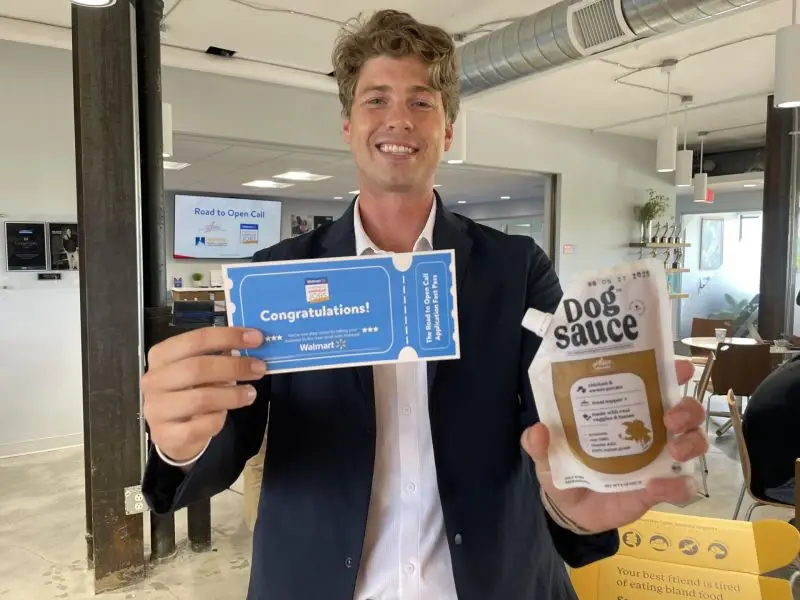
| Production financing | DogSauce · Walmart expansion | 3,000+ |
| Production financing | Triumph Systems · Walmart launch | 1,266 |
Talk to the CPG team



Take the guide with you
Get this guide as a PDF: every financing type, the numbers lenders check, the cost math, the process, and the document checklist in one file you can send to a co-founder, a buyer, or a lender.
Thank you, . Your download is starting. If it does not begin, download the guide directly.