
Financing a hotel is not like financing an office building or a warehouse. A hotel re-prices its inventory every night, carries an operating business inside the real estate, and answers to a brand that can require a renovation on its own schedule. Lenders know this, so they underwrite hotels differently, and the owners who get the best outcomes are the ones who understand what a lender is looking at before the file ever goes out.
This guide covers the whole path: who lends on hotels, the metrics that decide your loan size, every structure available to you, what each one costs, the documents you will be asked for, and the sequence a deal follows from first conversation to funded. It is written for owners, developers, and sponsors (the people leading a deal and standing behind it), not for lenders.
How hotel lending works

There is no single hotel lending market. There are five, and they barely overlap. Knowing which one your deal belongs in is the first decision, because taking a construction request to a life company or a fast-closing acquisition to a bank committee wastes weeks you may not have.
Commercial banks hold the loan on their own balance sheet. That produces the lowest cost and the longest relationship, and it is also why the credit box (the set of deal characteristics a lender will approve) is the tightest and the close is the slowest. Most banks do not lend on hotels at all. The ones that do are specific about flag (the brand affiliation, such as Hampton or Comfort), market, and sponsor.
SBA (Small Business Administration) lenders use a government guarantee to stretch leverage and term further than a conventional bank will. The trade is a document-heavy process and eligibility rules that disqualify some ownership structures outright.
CMBS (commercial mortgage-backed securities) desks originate fixed-rate loans that get pooled with other commercial mortgages and sold to bond investors. You get non-recourse debt, meaning the lender's claim is limited to the property rather than your other assets, and long term. You give up flexibility after closing, because a servicer rather than your original lender controls most changes.
Debt funds and private credit lend pooled private capital. They close faster and structure more creatively than a bank, which is what makes them the right tool for construction, transitional assets, and deals with a clock on them.
Life companies, the lending arms of insurance companies, offer attractive duration on stabilized, high-quality assets, meaning properties already running at their normal, sustainable occupancy and rate. They are not built for every leverage level or for a property with a PIP clock running (a PIP is a brand-required renovation plan, covered below).
Bridge sits across all five. Bridge directly lends for select new-construction and PIP transactions, and for other hotel needs Bridge may structure and secure financing through its lender network. The applicable role is stated clearly for every transaction. The direct book is narrow by design, which means most of what Bridge sees becomes deal flow for the banks, credit unions, SBA lenders, debt funds, and private lenders in the network. In 2025 that added up to more than $500 million closed, including more than $100 million in direct hotel lending.
The numbers lenders check

Before anyone discusses rate, a lender is testing whether the property can carry the debt you are asking for. These are the measures that decide it, roughly in the order they get run.
Net operating income
Net operating income is the property's revenue minus its operating expenses, before debt service and before income taxes. Everything downstream is built on it, which is why lenders rarely accept your NOI as presented. They rebuild it, and the two adjustments that surprise owners most are a market-rate management fee and a full reserve for furniture, fixtures, and equipment (FF&E).
Debt service coverage ratio
DSCR is net operating income divided by annual debt service. A DSCR of 1.25x means the property earns $1.25 of NOI for every $1.00 of loan payments. Most commercial lenders want at least 1.20x to 1.30x, and hotels often need 1.30x or better because their income is more variable than a leased asset's. Below 1.00x the property does not cover its own debt. On most hotel deals DSCR, not loan-to-value, is what actually caps the loan. You can test yours with the DSCR Loan Qualifier.
Debt yield
Debt yield is net operating income divided by the loan amount. It is the one coverage measure that does not move when rates or amortization move, which is why lenders lean on it when the rate environment is unsettled: it answers what return the lender earns if it has to take the property back. A minimum of 9% to 11% is common on hotels. See the DSCR, debt yield, and loan constant calculator.
Loan-to-value and loan-to-cost
LTV is the loan divided by appraised value; LTC is the loan divided by total project cost. Hotel lenders commonly land at 65% to 75% LTV and 70% to 80% LTC as of Q3 2026, with bridge and value-add deals at the higher end. Ground-up construction is sized on cost rather than value because there is no operating history to appraise. When both tests apply, the loan is sized to the lower of the two. Run yours in the LTV and LTC calculator.
The FF&E reserve
The FF&E reserve is money set aside from revenue to replace furniture, fixtures, and equipment as they wear out. Most major brands require 4% of total revenue for a stabilized hotel, with new builds ramping from roughly 1% to 2% in the first two years and full-service or resort properties running 4% to 5%. The part that catches owners: lenders deduct the reserve before NOI when sizing debt, and most apply a floor of 4% of total revenue regardless of what you actually spend. If your operating statement shows less, expect the lender's NOI to come in below yours. The FF&E reserve calculator shows the impact.
ADR, occupancy, and RevPAR
ADR is average daily rate, the average room revenue per occupied room. RevPAR is revenue per available room: ADR multiplied by occupancy. A hotel running $145 ADR at 72% occupancy has $104.40 RevPAR, and a 120-room property at that level produces roughly $4.57 million in annual room revenue. RevPAR measures rooms revenue only, so it excludes food and beverage and other departments. US hotel RevPAR commonly runs from about $60 to $160 depending on class and market. Use the ADR and RevPAR calculator.
RevPAR index
RevPAR index is your RevPAR divided by your competitive set's RevPAR, multiplied by 100. Your competitive set is the group of nearby hotels your report benchmarks you against. An index of 100 means you are capturing your fair share of the market. Lenders and brands want 100 or better on a stabilized asset. The exception is a value-add story: PIP and repositioning deals often start well below 100, and the underwriting case is the projected climb after renovation. The number comes straight from your STR (Smith Travel Research) or CoStar report, and a lender will ask for it. See the RevPAR index calculator.
GOPPAR and profitability
GOPPAR is gross operating profit divided by available room nights. It is the measure that shows whether revenue is converting to profit, which RevPAR cannot tell you. Gross operating profit margins typically run 30% to 40% for economy and midscale select-service, 38% to 48% for upscale select-service, and 28% to 38% for full-service and upper-upscale where labor and food and beverage weigh on the margin. See the GOPPAR calculator.
Break-even occupancy
Break-even occupancy is the occupancy level where the hotel covers every fixed cost, including debt service. Fixed costs include property taxes, insurance, debt service, base payroll, franchise minimums, and baseline utilities. Variable costs move with each occupied room: housekeeping labor, laundry, amenities, and OTA (online travel agency) commissions. Typical break-even lands around 55% to 70% for select-service, as low as 50% for economy, and as high as 75% for full-service. It is the single clearest answer to the question a lender is really asking, which is how far demand can fall before the loan is in trouble. Run yours in the break-even occupancy calculator.
Cap rate, value, and yield on cost
Cap rate is net operating income divided by property value, and inverted it turns NOI into an estimate of value. Hotel cap rates commonly run 7% to 9.5%, with select-service around 7.5% to 9.5% and full-service around 7% to 9%. Price per key, value divided by room count, is the shorthand the market uses to compare deals. For development, yield on cost is stabilized NOI divided by total project cost, and the spread between yield on cost and the market cap rate is the value you are creating by building rather than buying. Developers typically target 150 to 250 basis points of spread (a basis point is one hundredth of a percentage point). A project with $1.2 million of stabilized NOI on $13 million of cost yields 9.23% against a 7.5% market cap rate, a 173 basis point spread and roughly $16 million of stabilized value. See the cap rate calculator and the yield on cost calculator.
The loan types

Seven structures cover almost every hotel deal. They are not ranked; the right one depends on the asset, the timeline, and what you need the capital to do.
Bank loans
A commercial bank loan is traditional financing secured by the hotel and held on the bank's balance sheet. It is usually the lowest-cost, longest-term capital available to a hotel owner. It also carries the strictest covenants (ongoing financial tests you must keep meeting), typically full recourse (you personally guarantee repayment), and the slowest close, because the bank intends to live with the credit for years. Banks do not usually fail on rate. They fail on access: there are thousands of banks and only a fraction have a real hotel credit box. A bank loan suits owners who can clear a conservative box in exchange for cost and term. It does not suit a closing that cannot wait or a story that still needs time to stabilize. Read more on bank loans for hotels.
SBA loans
An SBA loan is a government-backed loan, typically 7(a) or 504, that finances a purchase, refinance, or renovation with lower down payments and longer terms than conventional bank financing. The 7(a) program runs to roughly $5 million and is flexible across purchase, refinance, renovation, equipment, and some working capital. Since July 2026 the SBA also allows a borrower to combine 7(a) and 504 loans for up to $10 million of total SBA-backed financing. The 504 program pairs a certified development company with a bank to finance major fixed assets, and it is often the lowest-equity path to a real estate purchase, though it is usually the wrong tool for a cash-out refinance or operating capital. Both are document-heavy, and 504 means two underwriting processes rather than one.
One eligibility rule deserves its own sentence, because it disqualifies ownership groups that would otherwise qualify on credit. As of March 1, 2026, every direct and indirect owner of an SBA 7(a) or 504 applicant must be a U.S. citizen or U.S. national with a principal residence in the United States, its territories, or possessions. Lawful permanent residents are not eligible to hold any ownership in the applicant, though a narrow exception allows up to 5% of aggregate ownership to sit with individuals who do not meet the standard. Rules like this change, so confirm the current requirement before you invest weeks in an SBA file. Read more on SBA loans for hotels.
CMBS loans
A CMBS loan is a fixed-rate hotel loan pooled with other commercial mortgages and sold to bond investors. Owners get long-term, non-recourse capital at competitive leverage. The trade is rigidity. Once the loan is securitized, the servicer rather than the original lender controls most changes, prepayment often requires yield maintenance (paying the lender the interest it would otherwise have earned) or defeasance (replacing the loan's collateral with a portfolio of government bonds), and assumptions, additional debt, and major property changes are restricted. CMBS fits a stabilized hotel with forecastable occupancy and ADR, a brand the market understands, and cash flow that covers debt service with room to spare. It does not fit ground-up projects, heavy renovations, or a plan that still needs to flex after closing. Read more on CMBS loans for hotels.
Debt funds and private credit
A debt fund is a non-bank lender that pools private capital to lend with faster closings and more flexible terms than a bank can offer. Pricing is not automatically higher than a bank's; it depends on leverage, asset quality, structure, and market conditions, and debt funds often trade some rate for speed, certainty, and flexibility. This is also the category that covers mezzanine and other subordinate structures layered behind a senior loan. Bridge lends directly through its own debt funds, which means on those deals the underwriting and the capital sit on the same side of the table: one capital source, no syndication (selling pieces of the loan to other lenders), and no re-trade (terms that worsen late in the process). Read more on debt funds.
Construction loans
A construction loan funds a ground-up build and is sized on cost rather than value, because there is no trailing twelve months to underwrite. Ground-up hospitality has no operating history, so the lender is underwriting the budget, the market study, the brand, and above all the sponsor. Interest reserve is sized into the loan up front so the project can service the debt before it opens, and funds are released through inspect-to-fund draws as work is completed. A construction loan gets the project open; it is not the permanent hold, and it needs a takeout, permanent financing from a bank, SBA, or CMBS lender that repays the construction loan once the asset is performing. Bridge's direct construction lending typically runs $10 million to $50 million for branded select-service and extended-stay hotels; smaller motels and unflagged projects are usually not a fit.
PIP and renovation financing
A PIP, or property improvement plan, is the renovation scope a hotel brand requires, usually at purchase, at relicensing, or at set brand milestones. PIPs are distinct from routine FF&E replacement: the brand issues a letter with a scope and a deadline, and the deadline is real. PIP financing runs roughly $500,000 to $15 million, FF&E can sit inside the loan, and the financing can be standalone or folded into a refinance so you close once instead of twice. Below about $500,000 a local bank or SBA product is usually cleaner.
C-PACE
C-PACE (Commercial Property Assessed Clean Energy) is long-term, fixed-rate financing for energy and resiliency improvements, repaid through a special assessment on the property tax bill rather than as conventional mortgage debt. Terms can run 20 to 30 years. Eligible measures include HVAC, LED lighting, building envelope, solar, water efficiency, and roofing, which means a meaningful share of a typical PIP or construction budget can qualify. Many states allow retroactive financing on work completed in the past one to three years. C-PACE is a complement to a senior loan rather than a replacement, and your senior lender has to consent. Check your state with the C-PACE eligibility tool.
Side by side
| Structure | Recourse | Typical speed | Best for | Watch out for |
|---|---|---|---|---|
| Bank | Usually full | Months | Stabilized holds, lowest cost | Covenants, access, timeline |
| SBA 7(a) / 504 | Personal guarantees | Months | Lower equity, longer term | Eligibility rules, document load |
| CMBS | Non-recourse | Months | Stabilized, long fixed term | Prepayment, servicer control |
| Debt fund | Often partial | Weeks when ready | Speed, transitional assets | Shorter term, exit plan |
| Construction | Usually recourse | Weeks to months | Ground-up builds | Draws, interest reserve, takeout |
| PIP loan | Varies | Weeks | Brand-mandated renovation | Brand deadline, minimum size |
| C-PACE | Assessment on the property | Weeks to months | Energy and resiliency scope | Senior lender consent, state rules |
Illustrative only. Speeds and structures vary by deal, and none of this is a quote or an offer of credit.
Matching loan to project

Buying a hotel
Acquisition financing typically runs $2 million to $50 million. The clock starts when you sign a purchase and sale agreement (PSA), so the practical question is not which lender is cheapest but which can close inside your contract. Share the PSA, the trailing twelve, franchise or license status, and sources and uses (a one-page table of where the money comes from and where it goes), and a complete file usually produces preliminary terms within 48 hours. Bridge has closed an acquisition in as little as 25 days. The most common way an acquisition dies is not credit; it is a lender that slowed down while the contract ran out.
Refinancing or taking cash out
Refinance and cash-out financing also runs $2 million to $50 million. Timing is the whole game. Bank and CMBS refinance timelines eat 60 to 90 days once you are in market, and waiting until 30 days out is how owners end up at a default rate (the penalty rate loan documents impose after maturity) or in a panicked bridge loan. Start when your loan is inside 12 months of maturity. Before you pick a path, model the prepayment window: yield maintenance, defeasance, and notice provisions on your existing loan can change which execution actually makes sense.
Building new
Construction financing runs $10 million to $50 million for branded select-service and extended-stay projects. Equity, a complete budget, a franchise application or approval, and a sponsor with relevant delivery experience are the file. Expect the lender to size interest reserve, set a draw schedule, and want a credible view of the takeout before it funds the first dollar. Build the numbers first in the Hotel Pro Forma Builder, which pulls benchmarks from industry data sources including HVS, Kalibri Labs, and CoStar so your stabilized NOI is defensible.
Meeting a PIP deadline
PIP financing runs $500,000 to $15 million and is driven by a date rather than by opportunity. Send the PIP letter and the deadline early: whether the timeline is real is the first thing to establish, and if it is tight the answer may be a different structure than the one you assumed. If your existing loan is also nearing maturity, folding the PIP into a refinance means one closing and one set of costs.
What financing costs

No honest guide quotes a hotel loan rate, because the rate depends on the asset, the leverage, the structure, and the underwriting. What is knowable is the mechanics of how a rate gets built.
Almost every commercial loan prices as an index plus a spread. Floating-rate loans price over SOFR, which replaced LIBOR because it is based on actual observed transactions rather than bank estimates. Fixed-rate loans price over the Treasury yield whose maturity matches the loan term. Some bank facilities price over prime, which typically sits three percentage points above the top of the fed funds range. As of Q3 2026, stabilized commercial real estate loans commonly price roughly 2% to 4% over their index, and construction and bridge loans price wider. Live index values are on the current rates page, which updates hourly from Federal Reserve data.
Beyond the rate, budget for the costs that come with any commercial closing: appraisal, property condition assessment, environmental report, lender legal, title and survey, and any brand or franchise fees. On a construction deal, add plan and cost review and ongoing inspection. These are third-party costs, they arrive after you accept a term sheet (the lender's written summary of the proposed terms), and they are one reason to be confident in your lender before you spend them. Bridge's placement fee on hotel acquisitions and refinances of $10M or more is 0.50%.
The end-to-end process

A hotel financing follows the same eight stages whether it closes in 25 days or five months. What changes is how long each stage takes and how many of them run in parallel.
- Prepare the file. Assemble the documents in the checklist below. This is the stage owners skip and then pay for later, because an incomplete file does not get a slower answer, it gets a worse one.
- Submit the request. Property, flag, use of proceeds, and timing. It takes about three minutes to start, at no cost and no obligation.
- Underwriting alignment. Your request gets structured against how hotel lenders are actually lending today, not how they lent two years ago. This is where a deal is matched to the lenders whose credit box fits.
- Preliminary terms. Complete files typically see preliminary terms within 48 hours, or a clear explanation of what would need to change.
- Term sheet. Compare structures, not just rates: recourse, term, amortization, prepayment, reserves, and covenants decide what the loan costs you over its life.
- Third-party diligence. Appraisal, property condition assessment, environmental, title, survey, and legal. Order these early. Late diligence is the most common reason a rate lock (the lender's commitment to hold a quoted rate for a set window) expires and a close slips.
- Closing. Lender, brand, title, and counsel all have to land together. Open items get driven to zero.
- After closing. Construction and PIP loans move into draws, funded against inspections as work completes. Everything else moves into servicing.
The document checklist

Almost every hotel lender asks for the same core file. Having it ready is the difference between preliminary terms this week and preliminary terms next month.
- Property overview: brand, key count, location, and year built
- Use of proceeds, plus the purchase and sale agreement on an acquisition or existing loan documents and payoff on a refinance
- Trailing twelve months of operating statements, with occupancy and ADR
- Sources and uses for the transaction
- STR or CoStar report showing your competitive set and RevPAR index
- Franchise agreement or license status, and any brand or PIP requirements with their deadlines
- Sponsor resume, ownership structure, and recent hotel experience
- Personal financial statement, tax returns, and ownership basics for the guarantors (the people personally backing the loan)
- For construction: full budget, plans, contractor and GMP (guaranteed maximum price) contract, market study, and franchise application
Why deals stall

Files rarely fail on a single fatal flaw. They stall, and the stalls are predictable.
Diligence starts too late. Appraisal, property condition assessment, environmental, and legal all have lead times. Starting them after everything else is settled is how a 60-day close becomes a 90-day close.
The trailing cash flow does not support the ask. If the lender's rebuilt NOI, after a market management fee and a 4% FF&E reserve, will not carry the requested leverage at a 1.30x DSCR, the loan gets resized. Better to know that before you are in market.
Brand and PIP requirements sit outside the underwriting. A franchise renewal or a PIP scope that appears late changes the capital need and the timeline at once.
The file is incomplete. Missing documents stretch a rate lock, and a stretched rate lock costs real money.
The deal went to the wrong desk. A perfectly financeable hotel shown to a lender that does not buy that asset type, market, or leverage produces a decline that says nothing about the deal.
Working with Bridge

Bridge built its own underwriting engine so a hotel deal that takes a bank months takes days. It reads the whole file, operating statements through franchise agreement, so the deal is priced on how the hotel actually performs rather than padded for what a slower desk cannot see. From there the deal closes on Bridge's balance sheet, or with the right lender in the network.
Bridge is an official financing partner of Hilton, Choice Hotels, Hyatt, Wyndham, Red Roof, and AAHOA (the Asian American Hotel Owners Association), so brand comfort letters and PIP or franchise conditions are part of how deals get underwritten rather than a surprise late in the process. All financing is subject to application, credit review, underwriting, approvals, and definitive documentation. There is no cost to see terms and no obligation to close.
About Bridge

Bridge is a capital markets advisor built for hospitality sponsors, combining direct lending with a marketplace of institutional capital. An AI underwriting platform reads the whole file the way a credit desk would, and a 35-person originations team shops every deal to the lenders whose box it actually fits, so terms arrive in days rather than weeks.
2025 closings spanned every major flag family: Hilton brands were 30% of the book, Choice 20%, Marriott 16%, Hyatt 15%, Wyndham 12%, and independent properties 7%.
Selected closed transactions
| Type | Brand | State | Amount |
|---|---|---|---|
| Construction | Home2 Suites by Hilton | California | $24,850,000 |
| Construction | SpringHill Suites by Marriott | Oregon | $20,000,000 |
| Acquisition | Hampton by Hilton | Arizona | $18,500,000 |
| Construction | Outset by Hilton | Alabama | $17,000,000 |
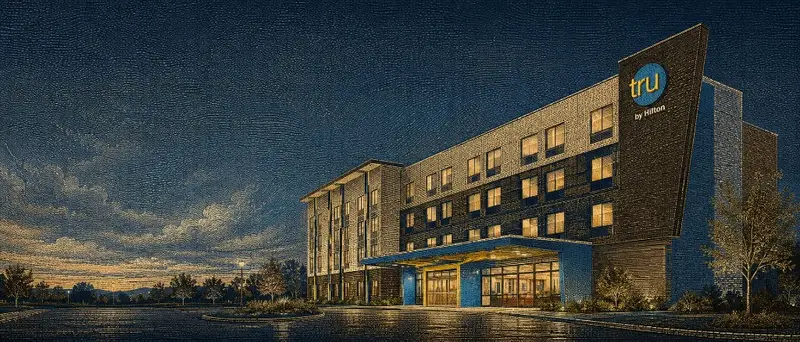
| Construction | Tru by Hilton | Florida | $15,500,000 |
| Construction | WoodSpring Suites | Texas | $10,450,000 |
| Refinance | Homewood Suites by Hilton | North Carolina | $10,000,000 |
| Refinance | Staybridge Suites | South Carolina | $9,200,000 |
| Acquisition | TownePlace Suites by Marriott | South Carolina | $8,625,000 |
| Construction | Candlewood Suites | Ohio | $7,500,000 |
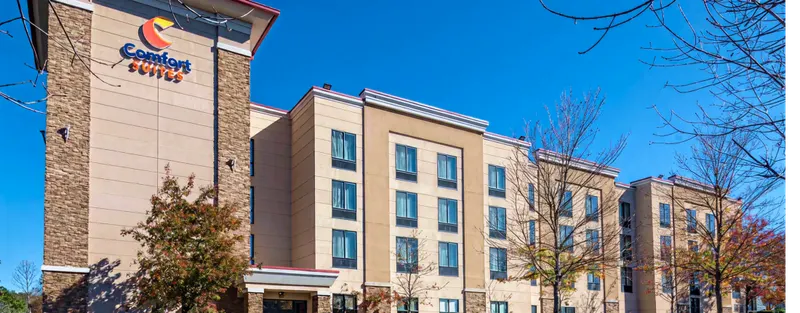
| Acquisition | Comfort Suites | South Carolina | $6,630,000 |
| Refinance | Baymont by Wyndham | South Carolina | $2,800,000 |
All transactions closed and funded. Terms subject to underwriting; details available on request.
Talk to the CRE team



Take the guide with you
Get this guide as a PDF: every loan type, the underwriting benchmarks, the process, and the document checklist in one file you can send to a partner or a lender.
Thank you, . Your download is starting. If it does not begin, download the guide directly.